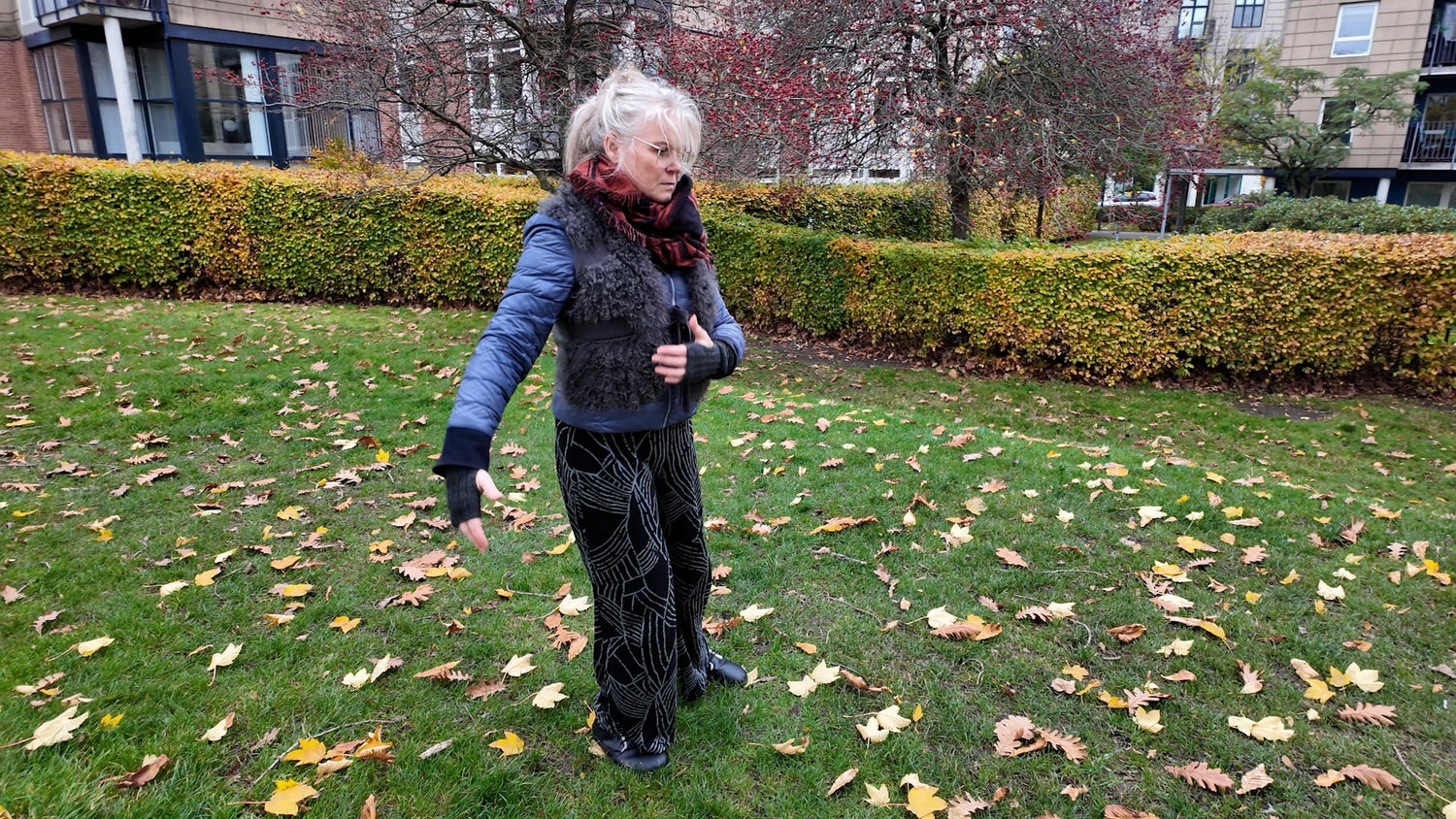
Annesophia is a dancer, a certified Wuji gong teacher, and someone who knows what it means to rely on her feet. At 57, she lives an active life that requires presence, grounding, and freedom of movement. For her, barefoot shoes aren’t a trend or a lifestyle statement—they are a tool to stay connected to her body, her practice, and her well-being.
Movement Starts with the Feet
Whether she’s dancing outdoors or practicing Wuji gong in the forest, Annesophia depends on the subtle interaction between her body and the ground.
"I can only jump if I have a flexible sole."
She started using barefoot shoes not for fashion or fitness, but because she needed to feel her feet—to stay rooted and mobile at the same time. That connection is central to her teaching and to how she moves through the world.
A Practice that Demands Contact
Wuji gong is a meditative martial art focused on energy flow, grounding, and balance. As an instructor, Annesophia teaches therapists how to integrate movement into their work. But she can’t do that without proper foot contact.
"I rely on being able to move freely on my feet and for them to be in constant balance when I turn."
In barefoot shoes, she maintains the connection she needs—even as seasons change.
"In summer I stand barefoot, but in autumn, it's a gift to go out and do Wuji gong in the forest and still feel the ground beneath me."
Recovery Through Reconnection
Annesophia has had cancer twice. After chemotherapy, she experienced severe nerve damage in her feet. Doctors told her to try insoles and to get used to the limitations. But that didn’t sit right with her.
"After chemo, I could only walk 500 meters. The doctors talked about insoles and learning to live with it."
Instead, she turned to what she already knew: barefoot-style footwear. Years earlier, she had worn FiveFingers and trained her feet through natural movement.
"The insoles didn’t help me at all. I went back to barefoot shoes."
Since making the switch, she has rebuilt her gait and strength.
"Now I’ve been wearing barefoot shoes for about two years, and I have no problems with my feet. I walk five kilometers without issues."
What Works for Her
Annesophia’s story isn’t about finding the one right way—it’s about trusting what feels right. For her, that means shoes that let her feet move, sense, and adapt.
"If I wear regular shoes with arch support and a narrow toe box, I start getting pain after just one kilometer."
Her experience is a reminder that small decisions—like how we choose to stand and walk—can have a lasting impact on how we move, recover, and feel connected to ourselves.
Read more stories from people like Annesophia on our blog. Or better yet, try a pair and feel for yourself.